2026-11-20 ·
How to Spot Wind-Driven Rain Damage on Marco Island Roofs
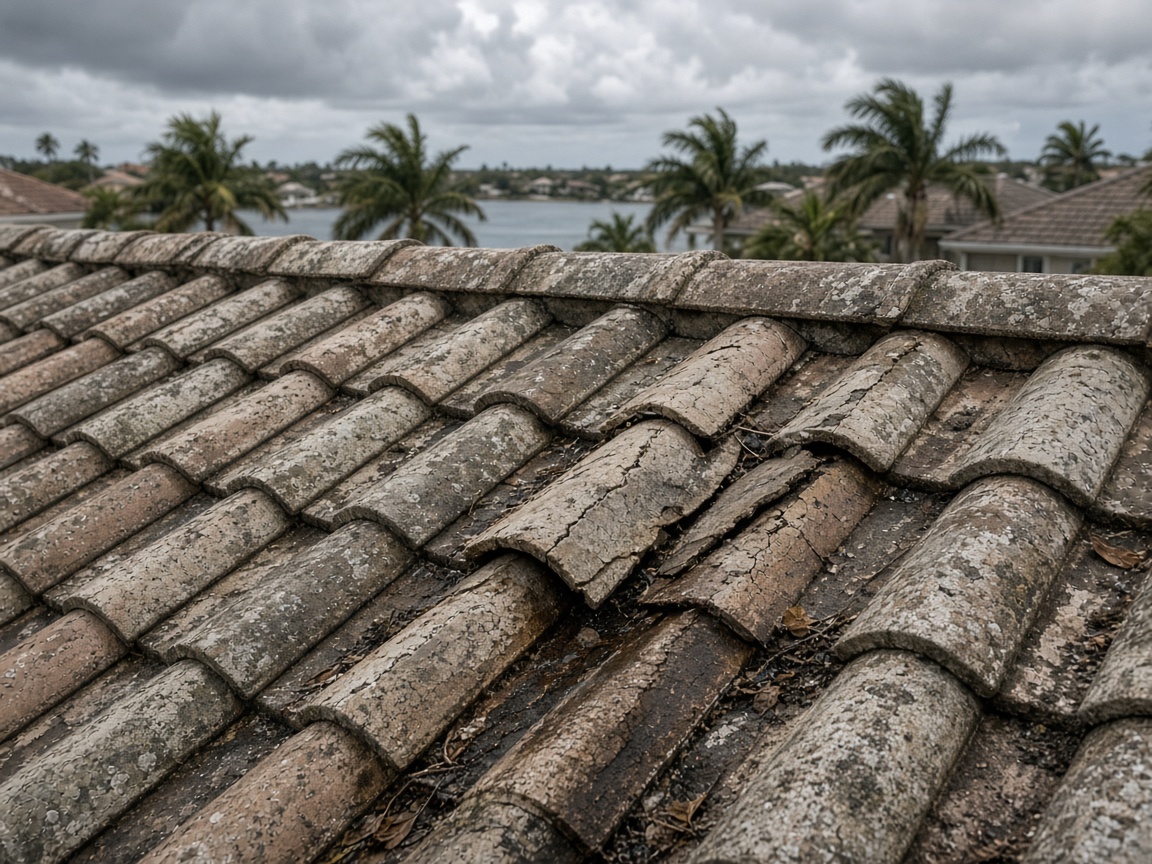
Wind-driven rain damage on Marco Island roofs shows up first as water intrusion along seams and edges after tropical storms push moisture sideways under shingles or tiles. Check for dark streaks on ceilings in attic spaces, lifted flashing around chimneys, and soft spots in decking near eaves, especially on homes in Olde Marco built before 1990.
Visible Surface Indicators
Inspect the roof surface from ground level or a safe ladder after storms with sustained winds over 30 mph. Look for granules missing from asphalt shingles in rows parallel to the prevailing wind direction from the Gulf. Tiles may show hairline cracks where water has forced its way beneath the overlap. In Tigertail Beach homes exposed to open water, metal panels can develop rust stains at screw heads where sealant has been driven out. These patterns differ from simple age-related wear because they align with wind paths rather than uniform aging across the entire slope.
Attic and Interior Checks
Enter the attic during daylight hours and scan for daylight pinpoints or damp insulation along the north and east slopes most common in Marco Island storms. Water stains on rafters often appear 2–4 feet inward from the eave rather than directly below the ridge. In Marco Shores properties with vaulted ceilings, check for mildew growth on drywall near exterior walls where wind-driven rain has penetrated ridge vents. Use a moisture meter on wood sheathing to confirm readings above 18 percent, which signals active intrusion that can lead to rot within one season of warm, humid weather.
Flashing and Penetration Points
Examine step flashing along valleys and wall intersections where wind can force water upward. On older homes near the Collier County Courthouse Annex, original lead flashing often separates after repeated events. Skylights and plumbing vents show rust rings or caulk failure within 8–12 inches of the base. These spots require close inspection because wind-driven rain travels horizontally before gravity pulls it downward, creating leaks that appear far from the entry point. Flashing repair addresses these vulnerabilities before they reach interior finishes.
Impact of Local Climate Patterns
Marco Island’s tropical conditions with hot, humid summers and warm winters keep roofs wet for extended periods after each storm. Salt-laden air from the Gulf accelerates corrosion on metal components in neighborhoods like Tigertail Beach. Warm winter temperatures prevent full drying cycles, allowing trapped moisture to promote algae and wood decay. Residents in nearby Goodland and Naples face similar patterns, but Marco Island’s barrier island location increases wind exposure during afternoon thunderstorms.
When to Schedule Professional Assessment
Schedule a detailed inspection through Roof Inspection if multiple signs appear within the same roof plane. Early detection prevents progression to decking replacement, which becomes necessary once moisture content stays elevated through multiple wet seasons. Compare findings against Understanding Marco Island Wind Load Requirements for Roofs to see whether current roofing meets updated fastening standards for the county’s wind zones.
Document any damage with dated photos from multiple angles before contacting a local roofer. Marcoisland Roofing operates from 74 Front St Unit 4 with hours Mon–Fri 8am–6pm and Sat 9am–2pm to evaluate these issues on Marco Island properties.